Wimpole Street Rubbish Collection for Medical & Office Waste
Posted on 09/10/2026
Wimpole Street Rubbish Collection for Medical & Office Waste
If you run a clinic, consulting room, shared practice, or busy office on Wimpole Street, rubbish is never just rubbish. A box of mixed paperwork, a broken desk chair, clinical packaging, or a bag of non-hazardous waste can quickly turn into a storage problem, a compliance headache, or an awkward issue for staff and visitors. That is exactly why Wimpole Street Rubbish Collection for Medical & Office Waste needs a more thoughtful approach than a standard household pickup.
This guide explains how the process works, what to watch for, and how to choose a reliable waste solution that fits a professional London setting. You will also find practical tips for separating office and medical waste, avoiding common mistakes, and keeping things tidy without disrupting a working day. To be fair, nobody wants rubbish to become the loudest thing in the building.
For broader service context, you may also find our services overview, waste removal in Marylebone, and rubbish collection in Marylebone useful while planning the right setup.

Why Wimpole Street Rubbish Collection for Medical & Office Waste Matters
Wimpole Street sits in a part of London where space is tight, foot traffic is constant, and professional standards are visibly high. Whether you are handling clinical supplies from a medical practice or everyday office waste from a consultancy, the way rubbish is stored and removed affects much more than cleanliness. It affects safety, trust, appearance, and how smoothly the workplace runs.
Medical and office waste each carry their own risks. Office waste can include confidential paperwork, electrical equipment, packaging, toner cartridges, and bulky items that clutter corridors fast. Medical waste may include contaminated disposables, sharps containers, PPE, and other items that need careful handling. Mixing these waste streams is not a small mistake. It can create avoidable risk, extra costs, and unnecessary stress for your team.
In a place like Wimpole Street, where many premises are small and often work by appointment, collection timing matters too. Nobody wants a corridor blocked by sacks, or a waiting room smelling faintly of old cardboard and disinfectant because removal was left too long. A good collection arrangement keeps things discreet, routine, and calm. Honestly, calm is underrated.
It also supports your reputation. Patients, clients, and visitors notice tidy entrances, clean storage areas, and quiet efficiency. For businesses that care about presentation, that is not a side issue. It is part of the service.
How Wimpole Street Rubbish Collection for Medical & Office Waste Works
At a practical level, rubbish collection starts with sorting. That sounds obvious, but many waste problems begin when staff throw everything into one bag and hope for the best. A more organised setup separates general office waste, recyclable materials, confidential paper, and any regulated clinical waste into the correct containers from the start.
From there, a collection team can remove the waste according to the agreed schedule. In many cases, this means either a one-off clearance, a recurring collection plan, or a flexible arrangement for busier periods. For example, a medical clinic refurbishing a treatment room may need a larger same-day uplift, while a law office on Wimpole Street might simply need a regular removal service for paper, packaging, and old office furniture.
The process usually involves a quick assessment of the waste type, volume, access restrictions, and timing. That matters in central London, where stairwells may be narrow, lift access can be limited, and loading space may be short. Small details become big details very quickly.
If the job involves office clearance as well as day-to-day rubbish, our office clearance service in Marylebone is a useful reference point. For larger mixed loads or broader premises clean-outs, the house clearance Marylebone and builders waste disposal Marylebone pages can also help you understand how different waste streams are managed.
In practice, good collection work comes down to three things: clear sorting, safe handling, and predictable timing. If any one of those is weak, the whole arrangement starts to wobble.
Key Benefits and Practical Advantages
The obvious benefit is a cleaner, more organised workplace. But the real value goes further than that. Proper rubbish collection can reduce risks, save staff time, and prevent awkward interruptions during the day. Here are the advantages that tend to matter most on Wimpole Street.
- Better hygiene and tidiness: Waste is removed before it starts to build up, which is especially important in medical settings.
- Less disruption: Scheduled collection means staff do not have to improvise every time a bin fills up.
- Improved compliance habits: Correct sorting supports safer handling and reduces the chance of accidental mixing.
- Professional appearance: Clients and patients judge more than they say, let's face it.
- Space recovery: Cupboards, corners, and back rooms stop becoming accidental dumping zones.
- More efficient recycling: Paper, cardboard, and suitable office materials can be separated more effectively.
There is also a less visible benefit: peace of mind. When waste is handled properly, managers and reception teams do not need to spend time worrying about whether a bin has been left in the wrong place or whether a collection was missed. That kind of background confidence is worth a lot in a busy practice or office.
For readers thinking long term, our recycling and sustainability page explains the wider approach to keeping waste handling more responsible without making it complicated.
Who This Is For and When It Makes Sense
This service is relevant to a wide range of Wimpole Street premises. Some are obvious, some less so. If your building generates routine waste and you care about presentation, safety, or compliance, there is a good chance this applies to you.
- Medical and dental practices: especially those with treatment rooms, clinical disposables, and regular patient turnover.
- Private clinics and consultants: where discretion, cleanliness, and punctuality matter.
- Professional offices: law, finance, property, design, and advisory firms all produce steady office waste.
- Co-working spaces: which often need flexible collection for shared bins and mixed occupancy.
- Fit-out or refurbishment projects: when office waste is temporary but heavy and frequent.
It also makes sense when waste starts to interfere with day-to-day work. Maybe the paper recycling is overflowing every Friday. Maybe old chairs and filing cabinets are stacked in a spare room because nobody has had time to deal with them. Or maybe a practice is expanding and suddenly the old bin setup just feels too small. These are the moments when a more structured collection plan saves time and avoids mess.
If you are unsure whether your space is really suitable for a standard arrangement, our about us page gives a better feel for how the service is approached, while pricing and quotes can help you think through the likely cost structure before you commit.
Step-by-Step Guidance
If you want the collection to run smoothly, the easiest path is to set it up in a clear sequence. Nothing fancy. Just a sensible process.
- Identify the waste streams. Separate general office rubbish, recyclable items, confidential paper, bulky furniture, and any medical or clinical waste.
- Check access points. Look at lifts, staircases, loading restrictions, and whether waste can be moved without disturbing patients or clients.
- Estimate volume. A small surgery with compact bins needs a different plan from a multi-room office producing boxes, packaging, and archive paper.
- Choose the right collection frequency. Weekly, fortnightly, ad hoc, or project-based removal each suit different workplaces.
- Set storage rules. Decide where bags, sacks, and containers will be kept before collection. Keep routes clear.
- Brief staff clearly. If people are unsure what goes in which bin, mistakes are almost guaranteed. A quick staff note works better than a long policy nobody reads.
- Confirm the collection plan. Make sure timing, access, and waste categories are agreed in advance, especially if the premises are busy.
- Review after the first pickup. One collection will tell you a lot. Was the timing right? Were the containers easy to access? Did anything get missed?
A small office once tries to "temporarily" store old monitors in a meeting room and, well, two months later the room had become a very expensive junk corner. It happens. The point is not perfection. The point is having a workable routine before clutter takes over.
Expert Tips for Better Results
After enough collections, a few patterns become obvious. The jobs that run best usually have the same habits behind them.
Keep waste separate from the start
Do not rely on someone sorting a mixed bag later. That is slower, messier, and often the point where problems begin. Separate at source wherever possible.
Use labelled containers
Labels sound dull, but they save time. A clearly marked bin for paper, general waste, or clinical items reduces confusion for reception staff, cleaners, and temporary workers.
Schedule collection around appointments
For a medical practice, the quietest half hour of the day may be the best time for removal. For offices, early morning or late afternoon can work better. Think about the movement in the building, not just the calendar.
Review waste output every few months
Waste volumes change. Staff numbers change. Services expand. A plan that worked in winter may be awkward by spring. A small review now and then keeps things efficient.
Keep an eye on confidential items
Paper waste is not always harmless. Any item containing patient information or client details should be treated carefully and stored in line with your internal privacy process. A shredder nearby can help, but only if people actually use it. Humans, eh?
For businesses that care about responsible disposal, it is also worth reading our payment and security page and insurance and safety information so you understand how the service is structured and protected.
Common Mistakes to Avoid
Some waste issues are avoidable with a bit of planning. The frustrating thing is that they are usually simple mistakes, not dramatic failures.
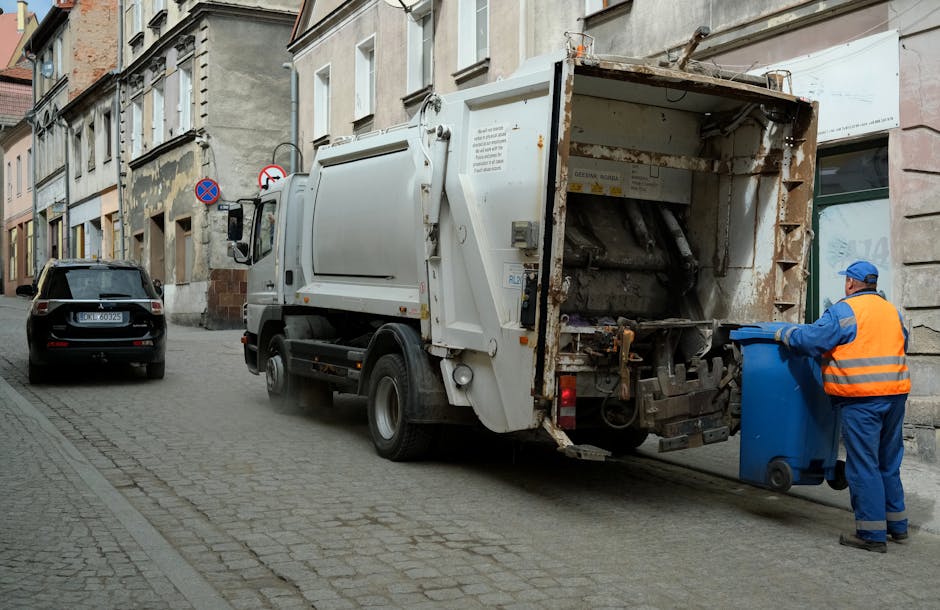
- Mixing medical waste with general rubbish: this is the big one. It can complicate handling and create avoidable risk.
- Underestimating volume: a few extra boxes become a lot when delivery packaging, archive folders, and broken furniture all pile up together.
- Leaving collection too late: rubbish is easier to manage when it is moved before it starts blocking access or smelling stale.
- Ignoring access issues: a perfectly good plan can fail if the lift is too small or the entry point is awkward.
- Not briefing staff: even a good system falls apart if no one knows where waste should go.
- Forgetting special items: toner cartridges, batteries, old electronics, and confidential records often need separate handling.
One practical rule helps more than most: if you are unsure what category an item belongs to, pause and check before putting it in a bag. That one extra minute can prevent a much bigger headache later.
Tools, Resources and Recommendations
You do not need a complicated setup to manage rubbish well, but a few basic tools make a real difference.
| Tool or Resource | Why It Helps | Best For |
|---|---|---|
| Clearly labelled bins | Reduces sorting mistakes and keeps staff aligned | Offices, receptions, shared spaces |
| Lockable storage for sensitive waste | Helps protect confidential items before collection | Medical practices, legal offices, advisory firms |
| Shredder or secure paper handling system | Supports document disposal discipline | Any office handling client or patient data |
| Waste log or simple checklist | Tracks what is being removed and when | Compliance-focused premises |
| Regular collection calendar | Prevents build-up and last-minute calls | Busy practices and multi-person offices |
For teams that want a broader clean-out or one-off reset, the Marylebone waste removal page and house clearance service are worth comparing against a routine collection plan. Sometimes the best answer is not "more bins", it is a full clear-out and a fresh start.
You may also want to review accessibility details if your premises have specific access needs, especially where tight stairways or limited entry points affect collection logistics.
Law, Compliance, Standards, or Best Practice
Waste handling in the UK is not something to take casually, especially when medical or confidential materials are involved. While the exact obligations depend on your premises and the nature of the waste, the general expectation is straightforward: store waste safely, separate it properly, and dispose of it responsibly through an appropriate service.
For medical settings, that usually means following internal procedures for clinical waste, sharps, and contaminated materials. For office settings, the focus is often on confidentiality, safe storage, recycling, and avoiding hazardous mixing. In both cases, good record-keeping and clear contractor arrangements are wise practice.
It is also sensible to check that any provider understands the difference between general rubbish, recyclable office waste, bulky items, and more sensitive waste streams. A collection company should be able to explain how items are handled in plain English. If the explanation feels vague, that is worth noticing.
Business owners and managers should also think about duty of care in a practical sense: who is responsible for sorting, storing, and authorising waste removal before it leaves the premises? Clear roles prevent confusion. That is not glamorous, but it works.
For more background on the values behind responsible disposal, our modern slavery statement and terms and conditions pages provide additional trust and governance context, while the privacy policy is useful where confidential data handling matters to your workplace.
Options, Methods, or Comparison Table
Different workplaces need different waste solutions. A one-size-fits-all setup usually ends up being slightly wrong for everyone. Here is a simple comparison to help you think it through.
| Method | Best Use | Advantages | Trade-Offs |
|---|---|---|---|
| Regular scheduled collection | Busy offices and medical premises with steady waste output | Predictable, tidy, low stress | Needs a consistent routine |
| One-off rubbish collection | Clear-outs, refurbishments, sudden backlogs | Fast and flexible | Not ideal for ongoing waste generation |
| Office clearance | Old furniture, files, equipment, and end-of-lease changes | Covers bulk items efficiently | More involved than simple bin collection |
| Mixed waste removal | Projects with several waste types at once | Convenient for transitional periods | Needs careful sorting and planning |
If you are unsure which option is right, start with the waste you produce most often. Then work outward from there. That approach is simple, but it usually gives the clearest answer. And yes, it is a bit less exciting than a dramatic overhaul, but far more practical.
Case Study or Real-World Example
Imagine a private medical consultancy on Wimpole Street with a small reception area, two consultation rooms, and a compact back office. The team is tidy, but over time the waste has become awkward: cardboard from deliveries, boxes of used supplies, a few old chairs, confidential paper, and some general rubbish from day-to-day activity.
At first, they try to manage it internally. Staff take out bags when they remember. Someone stores old stationery in a cupboard. A broken printer sits by the wall for three weeks, then becomes part of the scenery. Nothing dramatic happens, but the space starts to feel cramped and slightly chaotic.
The better fix is simple. They separate paper, general waste, and equipment, then set up a reliable collection rhythm. The office cupboard clears, the reception area looks smarter, and the team no longer wastes time deciding what goes where. In a medical setting, that calm matters. Patients notice it too, even if they never mention it.
If a bigger change is underway, such as a move, expansion, or refurbishment, the same workplace could combine routine waste handling with a one-off support service. That is where local expertise matters, because the right plan depends on the actual building, not just the postcode.
For businesses making longer-term decisions about the area, the local advice on Marylebone as a neighbourhood and the Marylebone real estate guide may also be useful context when planning occupancy, operations, or relocation.
Practical Checklist
Use this checklist before arranging or reviewing your waste collection.
- Do we know exactly which waste streams we produce?
- Are medical, office, recyclable, and confidential items kept separate?
- Is there enough storage space between collections?
- Have staff been told what goes where?
- Are access routes clear for collection day?
- Do we need regular collection or a one-off uplift?
- Are sensitive materials handled in line with our internal procedures?
- Have we checked timing so collections do not disrupt clients or patients?
- Do we know who is responsible for booking and monitoring pickups?
- Have we reviewed whether bulky items or electronic waste need separate handling?
Expert summary: The best waste collection systems are usually the quietest ones. They do their job in the background, keep the building looking sharp, and remove stress before it grows into a problem.
Conclusion
Wimpole Street Rubbish Collection for Medical & Office Waste is really about keeping a professional space safe, efficient, and easy to work in. When waste is separated properly, collected on time, and matched to the right handling method, everything else feels simpler. Staff have more room to work, visitors get a better impression, and managers spend less time dealing with avoidable mess.
The strongest waste plan is usually the one that fits your actual premises: your layout, your schedule, your type of work, and the level of discretion you need. Start with clear sorting, choose the right collection rhythm, and review the setup once it is running. Small improvements add up quickly.
Get a free quote today and see how much you can save.
For a friendly next step, you can also explore our pricing and quotes page, or take a closer look at rubbish collection in Marylebone if you want to compare options. A tidy workplace has a quiet kind of confidence to it, and that is no small thing.

Copyright © . House Clearance Marylebone. All Rights Reserved.